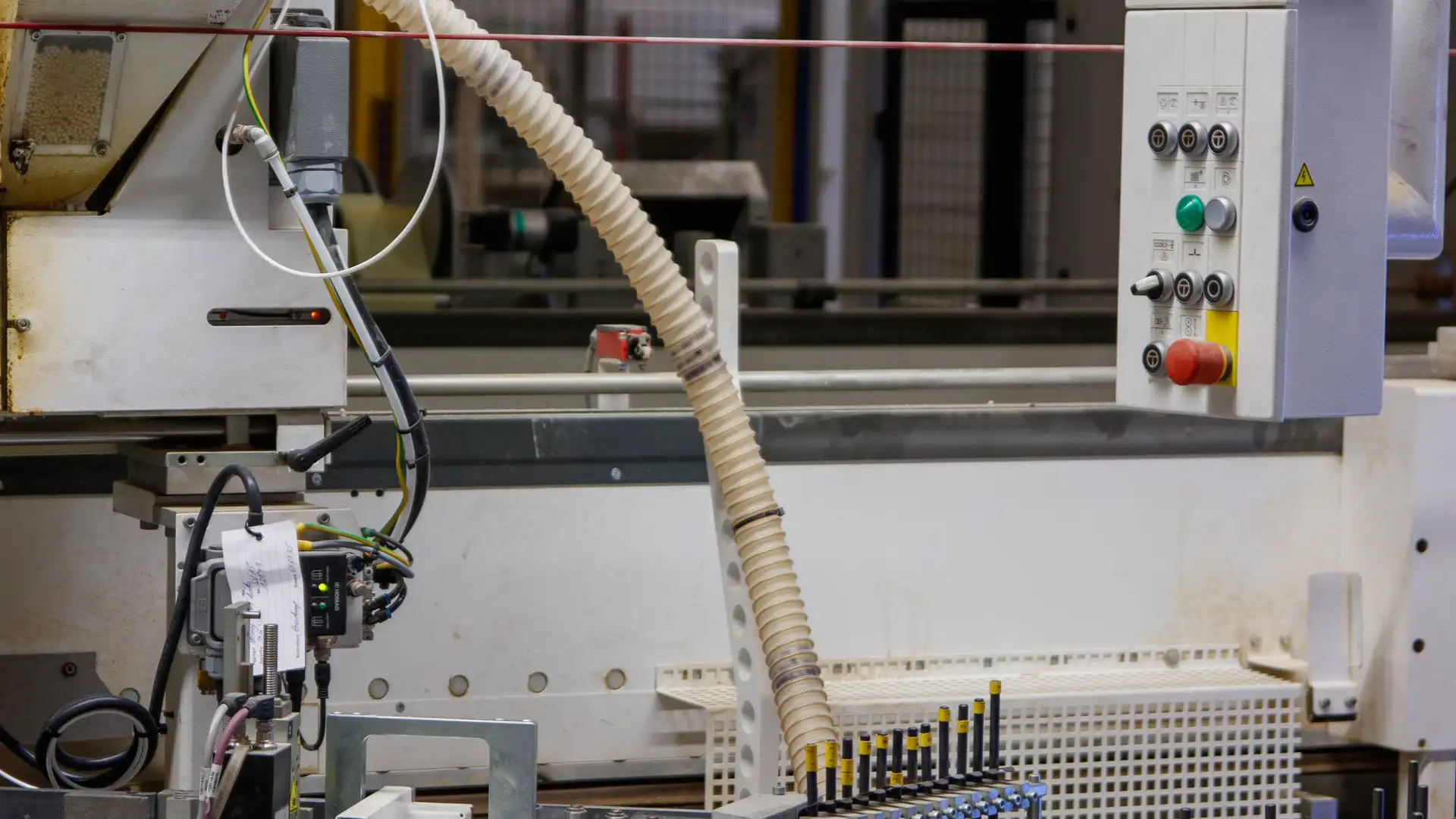
Intelligence applied where the parts are actually made.
Inspection, machine vision and process intelligence for plants where quality and throughput are limited by what cannot currently be measured.
Problem, Possibility, Method, Result.
The four questions this page answers about Manufacturing, in the order it answers them.
Industry Challenges
Quality inspection is sampled rather than complete, so defects are found after a batch is built rather than while it is being built.
Skilled operators are hard to recruit and retain, and the process knowledge they hold is rarely written down.
Machine data sits in controllers that do not talk to each other, so the cause of a variation is reconstructed after the fact.
Small-batch and mixed production defeats fixed automation designed around a single part.
Technology Opportunities
Machine vision makes full-coverage inspection economic where manual checking cannot scale.
Robotics handles the repetitive handling and machine-tending tasks that consume skilled time.
Process data, once collected consistently, supports prediction rather than only reporting.
Digital models of a line allow changes to be tested before they are made.
Vionexta Approach
- Begin with instrumentation and measurement, establishing what the process actually does before proposing what to change.
- Apply vision-based inspection to the defect classes that carry the most cost.
- Introduce robotics on tasks where variation is bounded and the payback is legible.
- Build the data layer alongside the automation, so the plant keeps the understanding as well as the equipment.
Potential Outcomes
Every unit inspected rather than a sample
Earlier detection of process drift, and less scrap as a result
Skilled operator time moved from repetitive handling to work that needs judgement
Maintenance planned from machine condition rather than from a calendar
Relevant Technologies
Industrial Automation
Machine vision, quality inspection, predictive maintenance and digital manufacturing — the intelligence layer above PLC and SCADA infrastructure.
Robotics
Industrial, inspection and collaborative robots, and the software and manipulation research that makes them useful on a real factory floor.
Artificial Intelligence
Computer vision, machine learning, edge AI and decision support, developed as an enabling layer inside physical engineering systems.
Future Possibilities
Lines that adjust themselves within set bounds when inspection detects drift.
Digital twins accurate enough that most process changes are validated in simulation first.
Flexible cells that handle mixed production without re-tooling between parts.
Let's Build the Future Together.
Whether you are Industry, a Research Institution, a University, a Government Agency, a Technology Partner, an Investor or a Student — we welcome opportunities to collaborate and create technologies that shape tomorrow.