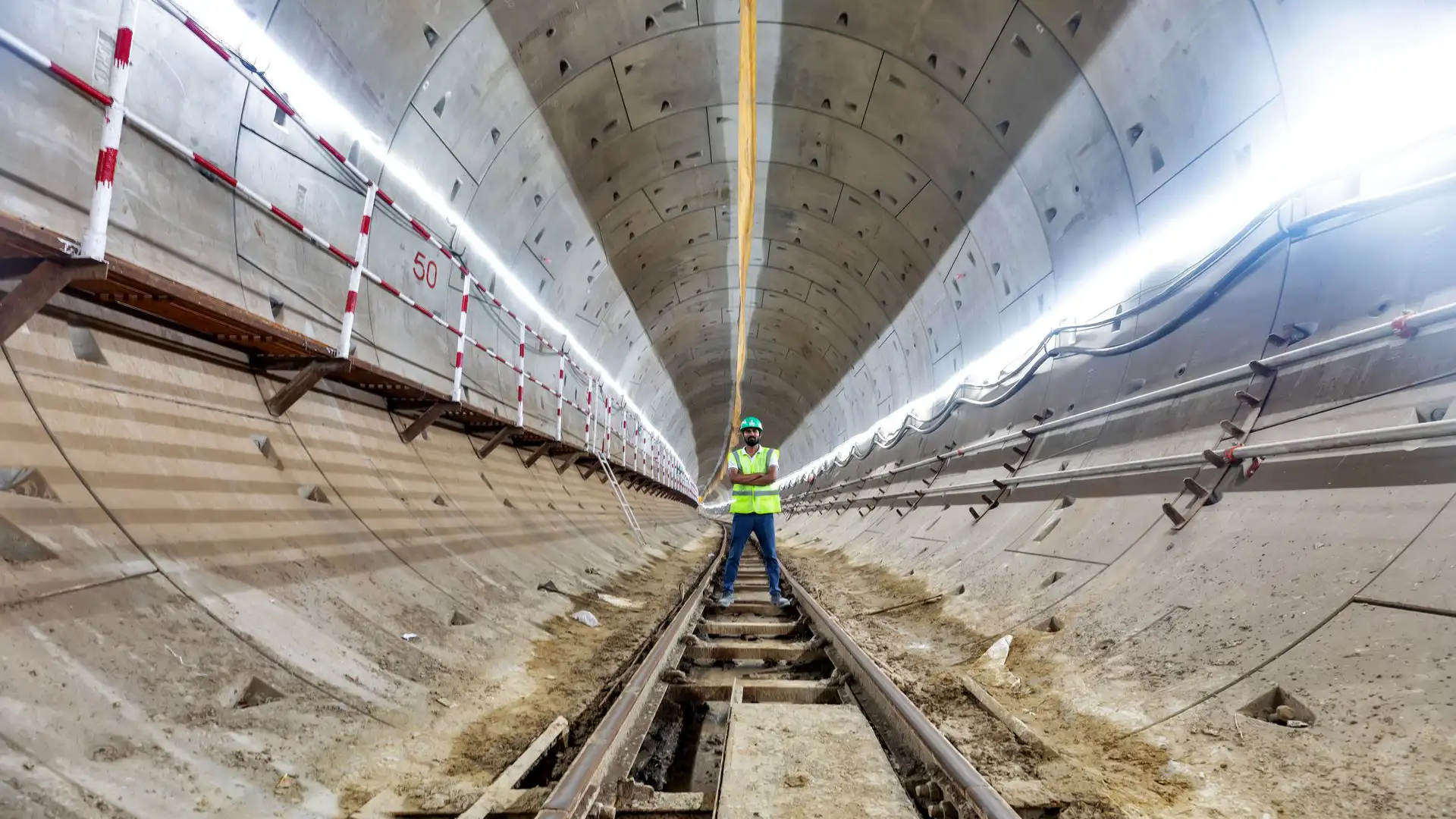
Inspecting structures that are difficult, costly or unsafe to reach.
Inspection robotics and computer vision for structural assessment and condition monitoring across bridges, roads, buildings and utility networks.
Problem, Possibility, Method, Result.
The four questions this page answers about Infrastructure, in the order it answers them.
Industry Challenges
Much inspection requires access that is slow to arrange, expensive to stage, or unsafe to perform at all.
Assessment is largely visual and qualitative, so the same structure can be graded differently by different inspectors.
Intervals are set by schedule rather than by condition, which inspects sound assets and can miss deteriorating ones.
Records accumulate as reports rather than as comparable measurements, making change over time hard to establish.
Technology Opportunities
Robotic and remote platforms reach spans, undersides and confined spaces without staging access for a person.
Vision models detect and measure cracking, spalling and corrosion consistently across inspections.
Embedded sensing reports condition continuously between inspections rather than only during them.
Comparable measurement over time turns inspection into a trend rather than a snapshot.
Vionexta Approach
- Start where access is the binding constraint, since that is where remote inspection changes what is possible rather than only what is cheaper.
- Treat measurement consistency as the objective — an assessment that cannot be compared to the last one has limited value.
- Instrument selectively, placing sensing where the structural question is genuinely open.
- Present results so an engineer can audit them, because responsibility for the judgement remains human.
Potential Outcomes
Inspection of locations that currently require staged access
Assessment repeatable across inspectors and visits
Maintenance prioritised by measured condition
A record that supports comparison over time
Relevant Technologies
Robotics
Industrial, inspection and collaborative robots, and the software and manipulation research that makes them useful on a real factory floor.
Artificial Intelligence
Computer vision, machine learning, edge AI and decision support, developed as an enabling layer inside physical engineering systems.
Embedded Systems
PCB design, sensors, embedded controllers, firmware and real-time systems — the hardware layer beneath robotics and industrial intelligence.
Future Possibilities
Platforms that survey a structure and return a comparable model each visit.
Condition models accurate enough to plan intervention before visible deterioration.
Long-term instrumentation on assets where failure consequences justify it.
Let's Build the Future Together.
Whether you are Industry, a Research Institution, a University, a Government Agency, a Technology Partner, an Investor or a Student — we welcome opportunities to collaborate and create technologies that shape tomorrow.