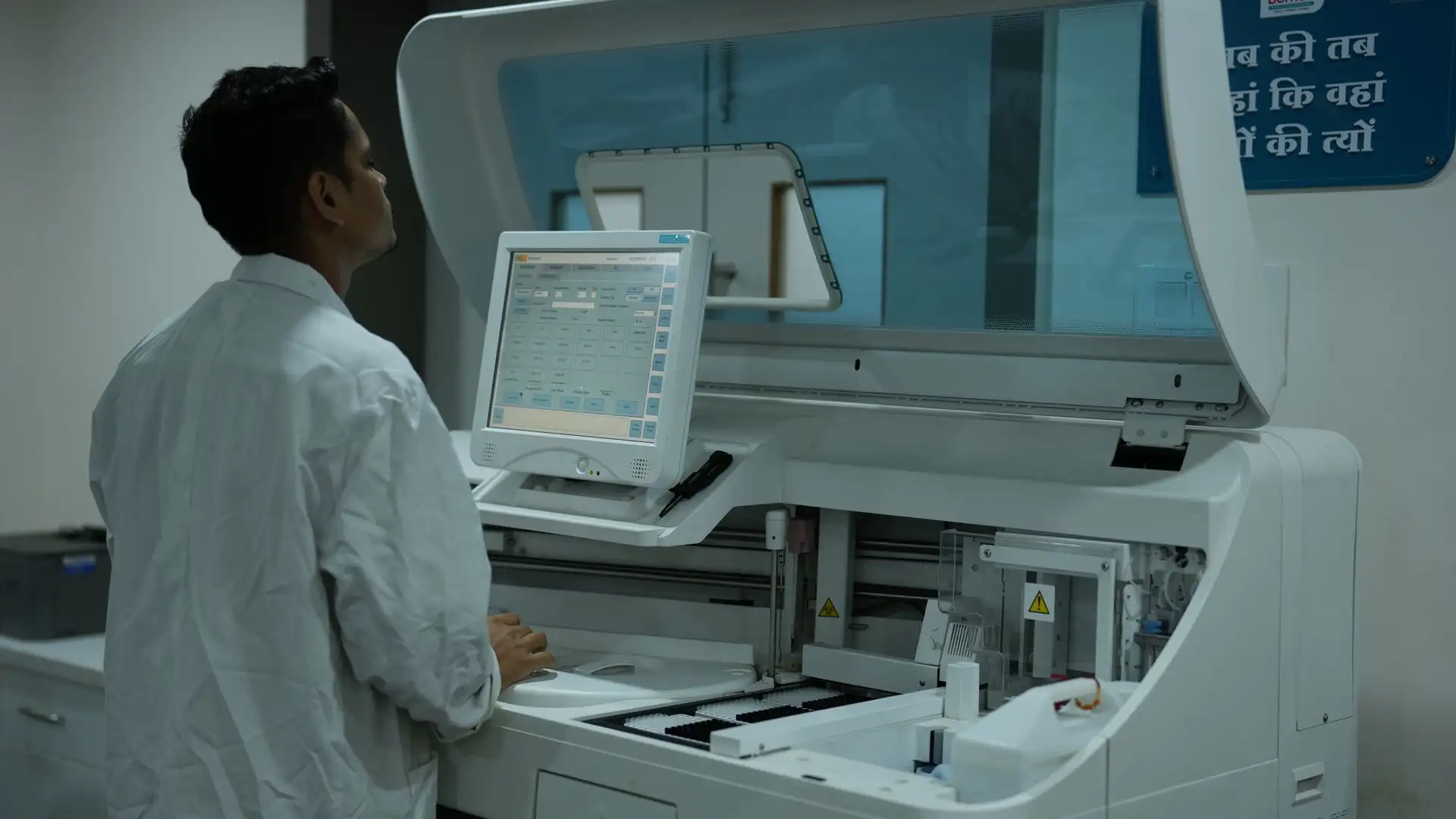
Engineering support for the work around clinical care.
Precision engineering, inspection and automation applied to medical device manufacture, laboratory workflows and hospital logistics.
Problem, Possibility, Method, Result.
The four questions this page answers about Healthcare, in the order it answers them.
Industry Challenges
Medical device manufacture carries validation and documentation requirements that constrain how processes may change.
Laboratory workflows involve repetitive handling that is precise, high-volume and error-sensitive.
Hospital logistics consumes clinical staff time on movement of supplies and samples.
Traceability and sterility requirements limit which conventional automation approaches apply.
Technology Opportunities
Vision inspection supports the documented quality evidence device manufacture requires.
Robotic handling suits repetitive laboratory tasks where consistency matters more than flexibility.
Autonomous movement of supplies returns clinical time to clinical work.
Embedded sensing supports monitoring of equipment and environmental conditions.
Vionexta Approach
- Work within existing validation frameworks rather than proposing changes that would invalidate them.
- Focus on the engineering and logistics layers around care, not on clinical decision-making.
- Design for cleanability and documented traceability from the first revision.
- Collaborate with clinical and laboratory teams on what the workflow actually requires.
Potential Outcomes
Inspection evidence produced as part of manufacture rather than added afterwards
Repetitive laboratory handling made consistent
Staff time returned from logistics to clinical work
Equipment and environmental conditions monitored continuously
Relevant Technologies
Robotics
Industrial, inspection and collaborative robots, and the software and manipulation research that makes them useful on a real factory floor.
Embedded Systems
PCB design, sensors, embedded controllers, firmware and real-time systems — the hardware layer beneath robotics and industrial intelligence.
Artificial Intelligence
Computer vision, machine learning, edge AI and decision support, developed as an enabling layer inside physical engineering systems.
Future Possibilities
Laboratory automation flexible enough for varied protocols rather than a single assay.
Hospital logistics handled by autonomous systems across whole facilities.
Device manufacture where traceability is a property of the process, not a separate record.
Let's Build the Future Together.
Whether you are Industry, a Research Institution, a University, a Government Agency, a Technology Partner, an Investor or a Student — we welcome opportunities to collaborate and create technologies that shape tomorrow.