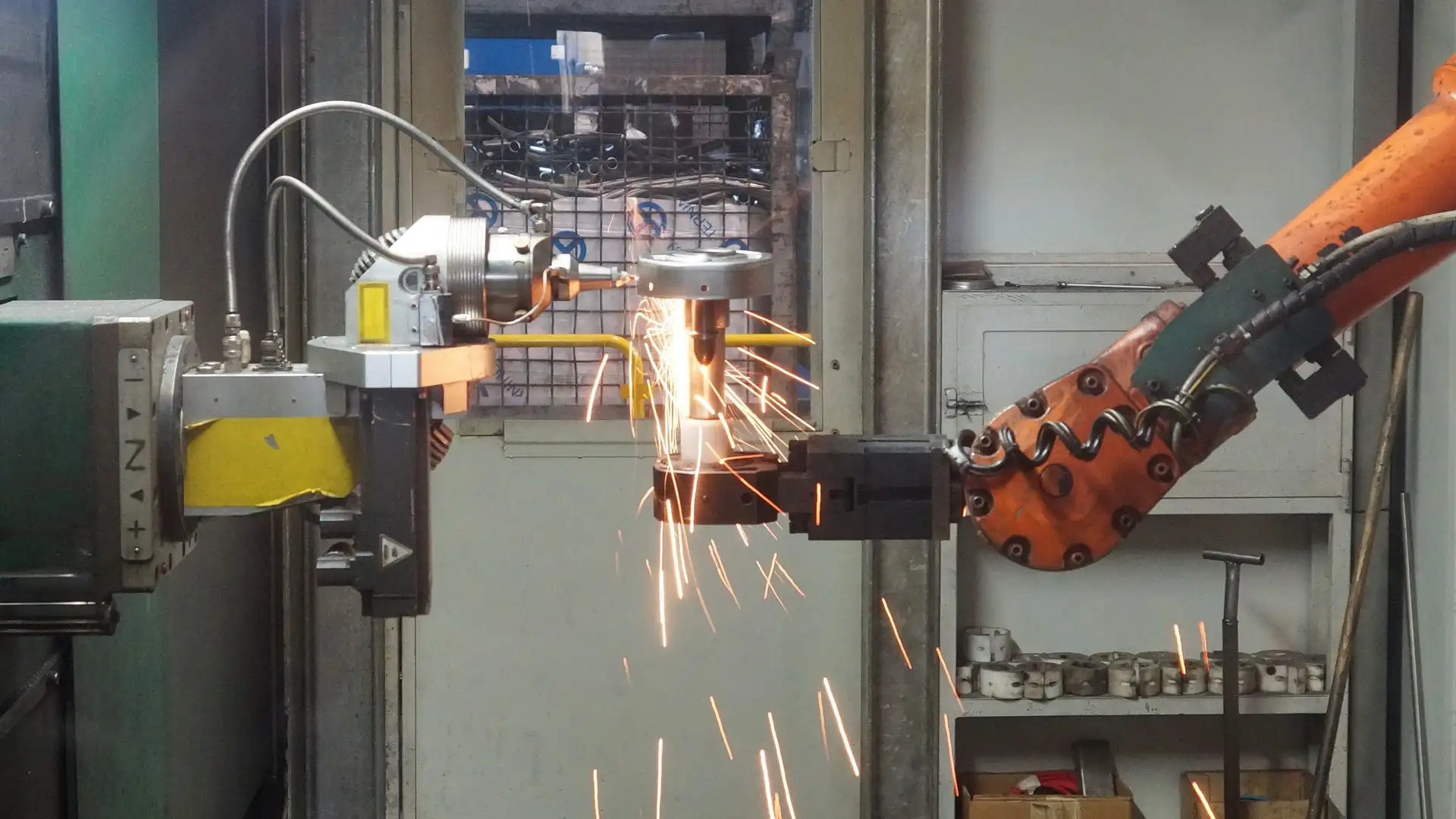
Precision and traceability at the volumes automotive demands.
Inspection, robotics and embedded engineering for component and assembly operations where tolerance, traceability and cycle time all bind at once.
Problem, Possibility, Method, Result.
The four questions this page answers about Automotive, in the order it answers them.
Industry Challenges
Tolerances are tight and inspection must keep pace with cycle time, which limits what can be checked manually.
Traceability requirements mean a defect found downstream has to be traced to a specific part, machine and moment.
Component variety grows faster than the ability to re-tool, particularly across drivetrain transitions.
Supplier quality variation propagates into assembly, where it is more expensive to find.
Technology Opportunities
Vision inspection at line rate makes complete dimensional and surface checking feasible.
Robotic handling and assembly absorbs the repetitive precision tasks that fatigue operators.
Per-part data capture supports genuine traceability instead of batch-level records.
Embedded sensing on tooling reveals wear before it shows up as a rejected part.
Vionexta Approach
- Design inspection to run within the cycle time rather than as an offline step.
- Capture inspection results against part identity, so traceability comes out of the process rather than being added to it.
- Apply robotics where precision and repetition combine, and keep human judgement where variation is high.
- Instrument tooling and fixtures so condition is observed continuously.
Potential Outcomes
Complete inspection coverage without extending cycle time
Defects traced to a specific part, machine and time
Fewer escapes into assembly, where correction costs more
Tool wear detected before it produces rejects
Relevant Technologies
Robotics
Industrial, inspection and collaborative robots, and the software and manipulation research that makes them useful on a real factory floor.
Industrial Automation
Machine vision, quality inspection, predictive maintenance and digital manufacturing — the intelligence layer above PLC and SCADA infrastructure.
Embedded Systems
PCB design, sensors, embedded controllers, firmware and real-time systems — the hardware layer beneath robotics and industrial intelligence.
Future Possibilities
Inspection data feeding back into machining parameters automatically.
Assembly cells reconfigured in software as component variants change.
Quality models that predict which parts warrant closer examination.
Let's Build the Future Together.
Whether you are Industry, a Research Institution, a University, a Government Agency, a Technology Partner, an Investor or a Student — we welcome opportunities to collaborate and create technologies that shape tomorrow.